


Picture this: you’re sitting at your kitchen table on a quiet Saturday evening, the steam rising from a fresh cup of coffee, when the screen in your palm begins to vibrate with a frequency that feels different: urgent, heavy, and definitive. Within seventy-two hours, the world as we knew it on Friday had shifted its axis. You weren't just reading about a skirmish or a surgical strike; you were witnessing the opening movements of Operation Epic Fury.
For those of us who remember the quiet dignity of a pre-digital age, the speed of this escalation is staggering. There was once a time when "war" felt like something that moved with the slow, deliberate pace of history books. Today, it moves at the speed of a fiber-optic cable. Since March 1, 2026, the U.S. and Israel have launched over 1,700 strikes against targets in Iran, a number so vast it’s difficult to visualize. It’s not just a statistic; it’s a systematic dismantling of a nation's military architecture, and the ripple effects are tearing through the global markets and the American political psyche with equal force.
The Scale of Epic Fury
To understand the weight of this moment, we have to look past the headlines and into the grit of the operation. The Pentagon hasn’t been timid. We’re talking about B-1s, B-2s, and B-52s: the heavy hitters of the American arsenal: filling the skies alongside F-35s and F-22s. The targets weren't chosen at random; they were the nervous system of the Iranian military. Command and control centers, the IRGC Joint Headquarters, and the very communication lines that allow a regime to project power have been neutralized.
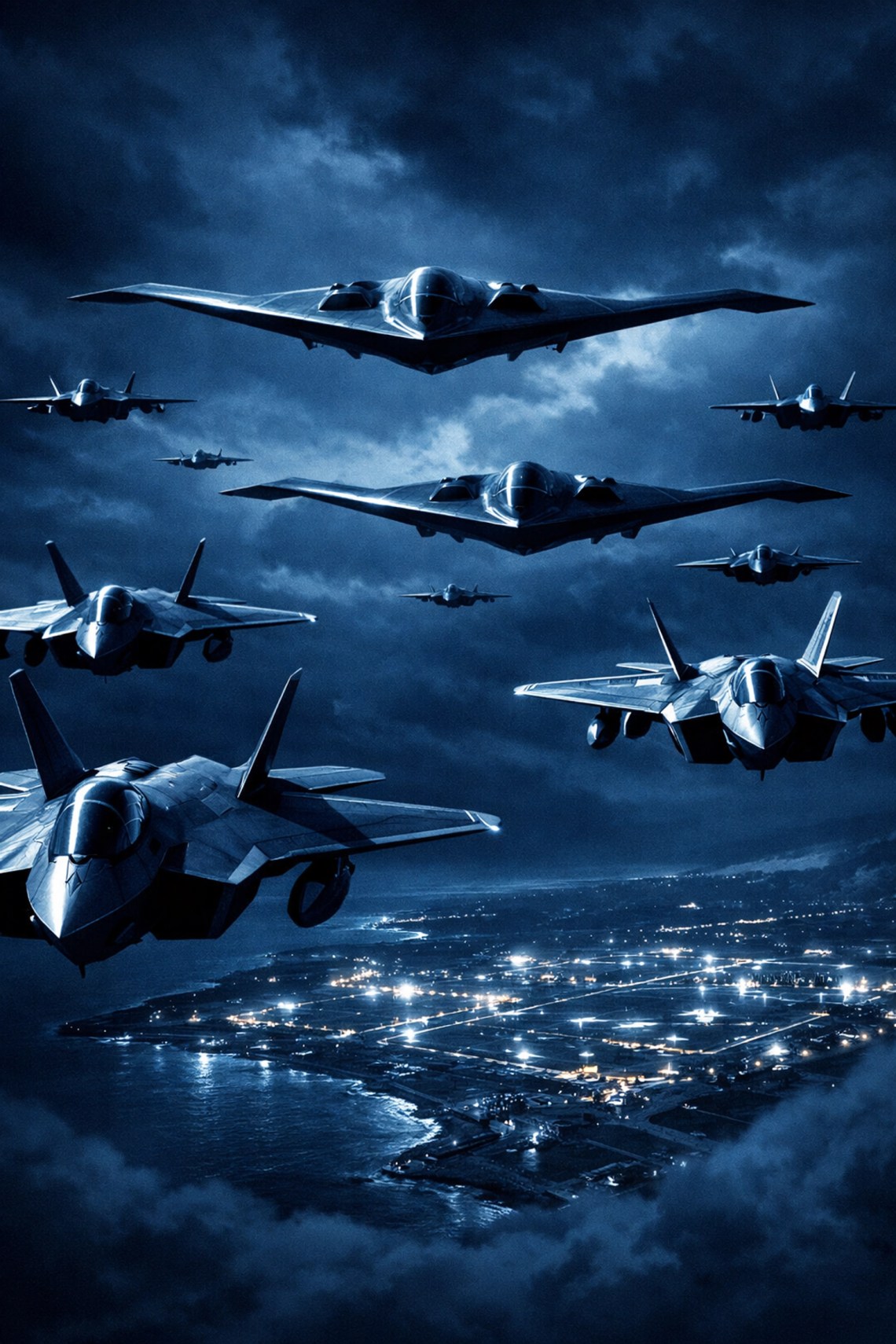
Official reports confirm that all eleven major Iranian naval vessels have been destroyed. The seas, once a theater of tension and "harassment" tactics, have seen a decade of naval buildup erased in a weekend. Yet, there is a chilling precision to it. Nuclear sites remain untouched, a clear signal from the coalition that this is about "imminent threats," not total annihilation: though to those on the ground, the distinction may feel academic.
But precision doesn't mean absence of tragedy. We’ve lost six U.S. service members. In a heart-wrenching incident in Kuwait, three F-15s were lost to friendly fire: a reminder that in the "fog of war," the most sophisticated technology in the world is still subject to the devastating fallibility of human error. It’s the kind of news that stops you mid-breath… the kind that makes you wonder if we ever truly learn the cost of the ground we stand on.
Markets in Turmoil: The Cost of Uncertainty
If the geopolitical world is on fire, the financial world is in the middle of a controlled: or perhaps uncontrolled: burn. Markets hate a vacuum, and they absolutely despise a war with no clear exit ramp. As the strikes intensified, we saw the immediate fallout of what we’ve been discussing for months: the trade decoupling.

When the State Department urges Americans to evacuate fourteen Middle Eastern countries, the algorithms that drive our modern economy don't just "react": they panic. We are seeing a flight to safety that feels like a throwback to the mid-20th century, yet it’s happening in a world of instant liquidity. Investors are pulling back from global tech and looking toward defense and domestic energy, but even there, the volatility is extreme.
You’re likely seeing it at the pump or in your retirement accounts already. The instability in Dubai and the UAE, following Iranian retaliatory drone strikes, has sent shockwaves through the energy sector. We often talk about free market capitalism as a robust system, but it relies on a foundation of relative peace and predictable shipping lanes. When those lanes are threatened by anti-ship missiles and regional chaos, the "invisible hand" starts to tremble.
The MAGA Divide: America First vs. Global Order
Perhaps the most fascinating: and troubling: aspect of this week isn't happening in Tehran or on Wall Street, but within the heart of the American conservative movement. For years, the MAGA banner stood for a specific kind of "America First" isolationism: a desire to bring the boys home, to stop being the world’s policeman, and to focus on the crumbling infrastructure of our own "temples" here at home.
But Operation Epic Fury has cracked that monolith wide open.
On one side, you have the "Peace through Strength" traditionalists who argue that an Iran left unchecked is an existential threat to the American way of life. They see these 1,700 strikes as the necessary "cleanup" that should have happened years ago. They see it as a restoration of public trust in our military's ability to act decisively.
On the other side, a growing and vocal segment of the MAGA base is asking a very different set of questions. They look at the six dead service members and the "friendly fire" in Kuwait and ask: For what? They see the market chaos and wonder why we are once again prioritizing the stability of global trade routes over the stability of the American middle class.
It’s a debate between the old guard's vision of a global hegemon and a new, more skeptical populism that views every foreign intervention with a jaded eye. This isn't just a political disagreement; it’s a struggle for the soul of the Republican party and the future of American civic life. Is our duty to the "Order," or is our duty to the "Citizen"?
The Echoes of What Once Was
There’s a certain nostalgia that creeps in when you look at the current state of affairs. You remember when the news felt like a shared reality, a series of events we could all agree were happening, even if we disagreed on the solution. Now, every strike is debated through a lens of "deep state" skepticism or "national security" necessity.
We used to have sanctuaries of discourse: places where you could talk about the FBI clean-up or voting integrity without it feeling like a battle for the very existence of the republic. Now, even a daily briefing on military operations feels like a Rorschach test for your political identity.
The institutions we once looked to for guidance: the media, the intelligence agencies, the financial analysts: seem to have lost that "sacred" quality. They’ve become participants in the fray rather than referees. It’s why civic education is more vital now than ever. If you don't understand the history of our engagement in the Middle East, or the mechanics of how war impacts your local economy, you’re just a passenger on a ship you don't know how to steer.
Moving Forward in the Fog
As we move through the rest of this week, the questions will only get harder. Will Iran’s retaliation escalate beyond drone strikes in the UAE? Will the "trade decoupling" become a permanent divorce? And most importantly, how will the American voter reconcile the need for a strong defense with the exhaustion of twenty-five years of constant conflict?

We’ll be keeping a close eye on the Capitalists Free Marketer Podcast for deeper dives into these numbers, but for now, the takeaway is clear: the era of "strategic patience" is over. We have entered an era of "kinetic consequence."
Whether you see this as a necessary restoration of American power or another step toward a global abyss, one thing is certain: the world changed on March 1st. And the "Daily Briefing" will never look quite the same again.
Stay informed, stay skeptical, and above all, stay engaged. The republic depends on it.
To learn more about our mission or to support our work in civic education, feel free to visit our About page or consider how you can Become a Sponsor to help us keep these briefings free and independent.
Share this:

Discover more from CAPITALISTS.com
Subscribe to get the latest posts sent to your email.


