


Picture this: You’re an entrepreneur in a small town, maybe somewhere in the Midwest or the heart of the South, and you have a vision for a new way to connect your community. You’ve got the tech, you’ve got the drive, and you’ve got the local support. But then you hit the wall: not a wall of competition, but a wall of paper. Thousands of pages of federal regulations, some dating back to the era of rotary phones and black-and-white television, stand between your idea and reality. It feels like the government is more interested in preserving the status quo of the 1970s than fostering the innovation of the 2020s.
That feeling, that sense of being stuck in a regulatory amber, is exactly what the Federal Communications Commission (FCC) is currently trying to shatter. Under the leadership of Chairman Brendan Carr, we are witnessing what many are calling the "Great Unplugging" of the federal bureaucracy.
The Great Regulatory Unplugging: Carr’s "Delete, Delete, Delete"
In what is being hailed as the most aggressive deregulatory blitz in the history of the agency, Chairman Brendan Carr has launched an initiative with a name as blunt as its goal: "Delete, Delete, Delete." The mission is simple yet massive: axing over 1,000 federal communications rules that Carr argues have done little more than "get in the way" of American innovation.
But why now? And why so many? To understand this, you have to look at the sheer weight of the administrative state. For decades, the FCC has piled rule upon rule, often forgetting to remove the ones that no longer apply. We’ve been operating a high-speed, fiber-optic world using a rulebook written for copper wires and telegrams. Carr’s move isn’t just about cutting red tape; it’s about a fundamental shift in how we view the relationship between the state and the innovator.
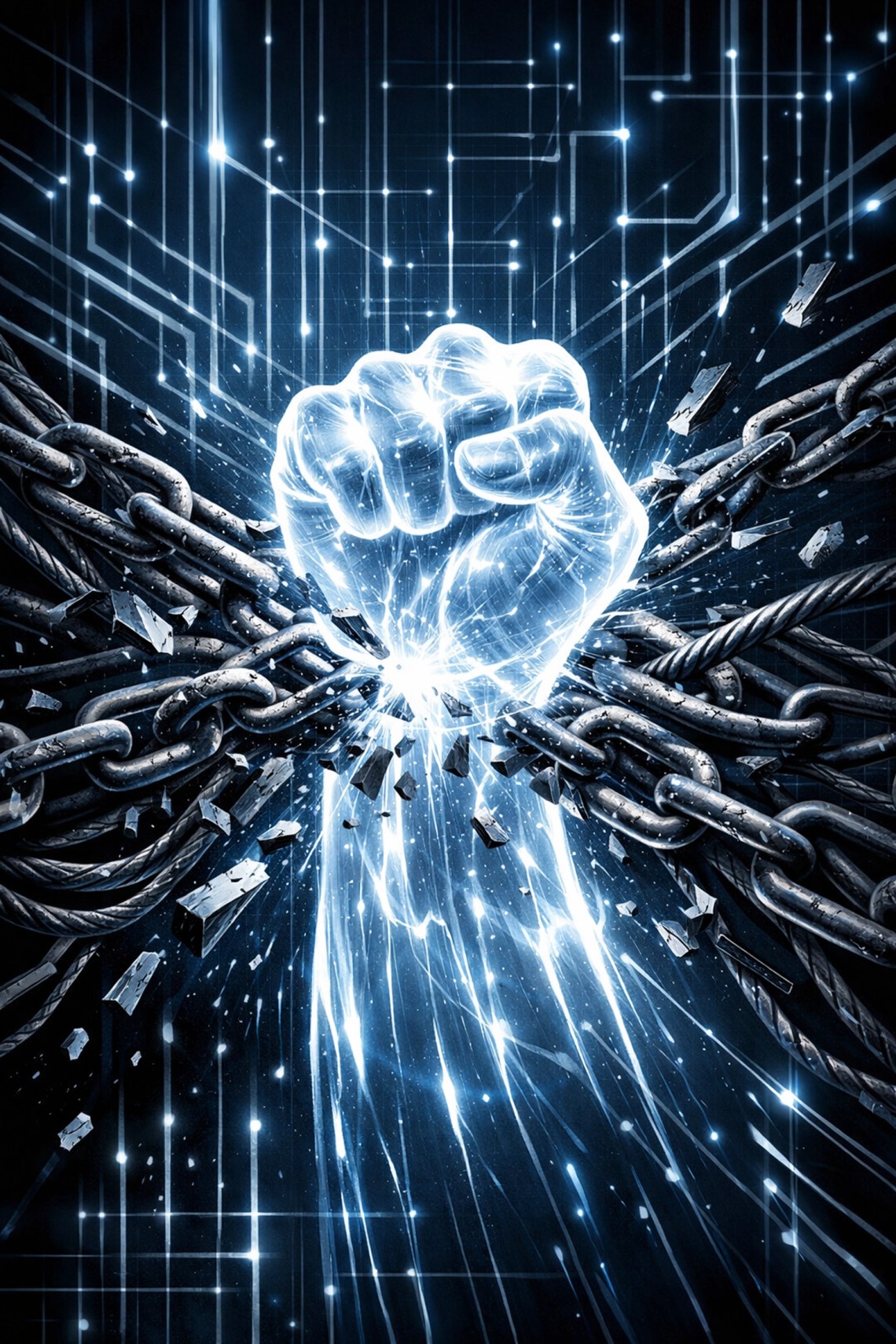
The initiative targets everything from redundant AM station modifications to the complex "bill-and-keep" intercarrier compensation systems that have long bogged down telecommunications providers. By streamlining these processes, the FCC is effectively telling the market: "The era of asking for permission to innovate is over." This aligns with a broader executive mandate to eliminate ten existing regulations for every new one introduced: a ratio that would have seemed impossible just a few years ago.
For the average citizen, this might sound like inside-baseball jargon. But think about it this way: when you remove the cost of compliance for a small internet service provider, that money doesn’t just disappear. It goes into better infrastructure, faster speeds, and lower monthly bills for you. It’s a return to the idea that the government should be the referee, not a player on the field, ensuring that the game is fair without dictating every single move. You can read more about how these shifts are impacting the broader landscape of conservative politics in 2024 and beyond.
A Nation of 19 Million Questions: The Demographic Reality
While the FCC is busy clearing out the digital corridors of power, a very different and more visible crisis is unfolding at our physical borders. A new report from the Federation for American Immigration Reform (FAIR) has sent shockwaves through the civic landscape, estimating that the illegal migrant population in the United States has now climbed to nearly 19 million people.
To put that number in perspective, 19 million people is roughly the population of New York State. It is a demographic shift of such magnitude that it touches every aspect of our civic life: from the strain on local schools and hospitals to the integrity of the labor market. It’s a moment that forces us to ask: What does it mean to be a nation of laws when the most fundamental law of entry is so consistently bypassed?

However, there is a second half to this story that often gets lost in the headlines. On the enforcement side, the gears are finally starting to turn with a new level of intensity. ICE Houston recently reported that arrests of "criminal predators": those with prior convictions for serious crimes: have nearly doubled compared to the final year of the previous administration. This surge in enforcement suggests a pivot toward prioritizing the removal of those who pose a direct threat to public safety, a move that many see as a necessary restoration of order.
But the question remains… how did we get here? For years, the sanctuary of the rule of law has felt like it was under siege, replaced by a philosophy of "wait and see." Now, as the numbers reach these historic milestones, the conversation is shifting from theory to cold, hard reality. If you want to stay updated on these rapidly evolving civic issues, you might want to sign up for our free market capitalists newsletter.
The Shadow Over the Strait: The Hormuz Oil Crisis
As if the domestic challenges weren't enough, the global stage has presented a crisis that could hit Americans directly at the gas pump. The Strait of Hormuz, often described as the "jugular of the global economy," is effectively closed. This narrow waterway, which carries about a fifth of the world’s oil consumption, has become the focal point of the escalating Iran-Israel conflict.
When the Strait closes, the world holds its breath. We aren't just talking about a few cents' increase at the pump; we are talking about a potential total disruption of global energy supplies. In response, the International Energy Agency (IEA) is proposing a move of historic proportions: the release of 400 million barrels of oil from global reserves.

This is a "break glass in case of emergency" scenario. The goal is to stop gas prices from spiraling out of control and to prevent a global inflationary shock that could derail the entire economy. But is a reserve release enough? Reserves are, by definition, finite. They are a bridge to get us across a crisis, not a permanent solution to geopolitical instability.
It brings us back to a core principle of civic education: energy independence isn't just an economic goal; it’s a national security imperative. When our ability to drive to work or heat our homes depends on the stability of a 21-mile-wide stretch of water in the Middle East, we are fundamentally vulnerable. The current crisis is a stark reminder of what happens when global "temples" of commerce are threatened by old-world conflicts.
Navigating the New Normal
When you step back and look at these three stories: the deregulation of our airwaves, the record-breaking migration numbers, and the energy crisis in the Middle East: a pattern begins to emerge. We are in a period of profound transition. The old rules, the ones we’ve lived by for decades, are being tested, discarded, or forcibly changed.

In the case of the FCC, we see an attempt to reclaim the future by shedding the weight of the past. In the migration crisis, we see the consequences of a system that has long been disconnected from the reality on the ground. And in the Strait of Hormuz, we see the fragility of a globalized world that remains dependent on a few volatile chokepoints.
These aren't just news items to be scrolled past; they are the building blocks of the world we are currently constructing. They challenge us to think about what kind of government we want, what kind of borders we need, and how we intend to power our future. At Capitalists, we believe that understanding these shifts is the first step toward navigating them.
The road ahead is rarely straight, and it’s never as simple as the headlines suggest. But as we see with the double-down on enforcement in Houston or the bold strokes of the FCC in Washington, there is a growing movement to return to a more disciplined, more innovative, and more self-reliant version of the American experiment.
Whether it’s the airwaves, the borders, or the sea lanes, the theme of 2026 is becoming clear: It’s time to get out of the way of progress, while simultaneously standing firm on the principles that made that progress possible in the first place.
… And as always, the question isn't just what the government will do next, but what we, as citizens, will demand of it.
Want to dive deeper into the forces shaping our world? Check out our latest episodes or learn more about our mission to provide clear-eyed political commentary and civic education on our home page.
Share this:

Discover more from CAPITALISTS.com
Subscribe to get the latest posts sent to your email.


