


Picture this: you’re sitting at your kitchen counter, the morning sun just beginning to cut through the blinds, and you’re scrolling through the headlines. It feels like the world is moving at a hundred miles an hour, doesn’t it? One minute we’re talking about budget stalemates in D.C., and the next, there are reports of precision strikes halfway across the globe. It’s a lot to process, even for the most seasoned political observer.
But that’s why we’re here. At Capitalists, we believe that understanding the "why" behind the "what" is the only way to navigate the modern political landscape. Today is Tuesday, March 10, 2026, and we have a packed briefing for you. We’re diving into the growing concerns over domestic security during the DHS shutdown, the evolution of the SAVE Act as a pivotal midterm strategy, and a look at the "neurological" strikes in Iran that are changing the face of modern warfare.
The Homeland in the Crosshairs: DHS Shutdowns and Sleeper Cells
There was a time: not so long ago: when the Department of Homeland Security was viewed as an untouchable fortress of American resolve. It was the sanctuary of our domestic peace, a sprawling apparatus designed to ensure that the horrors of the past remained just that: the past. But today, that fortress feels a bit more fragile.
Donald Trump has issued a stark warning that is vibrating through the halls of Mar-a-Lago and into the living rooms of every American. He’s sounding the alarm on the current DHS shutdown, arguing that this legislative freeze is doing far more than just pausing paychecks; it’s blinding our watchmen. Specifically, the former President claims that the shutdown is hampering critical investigations into Iranian sleeper cells allegedly active on U.S. soil.
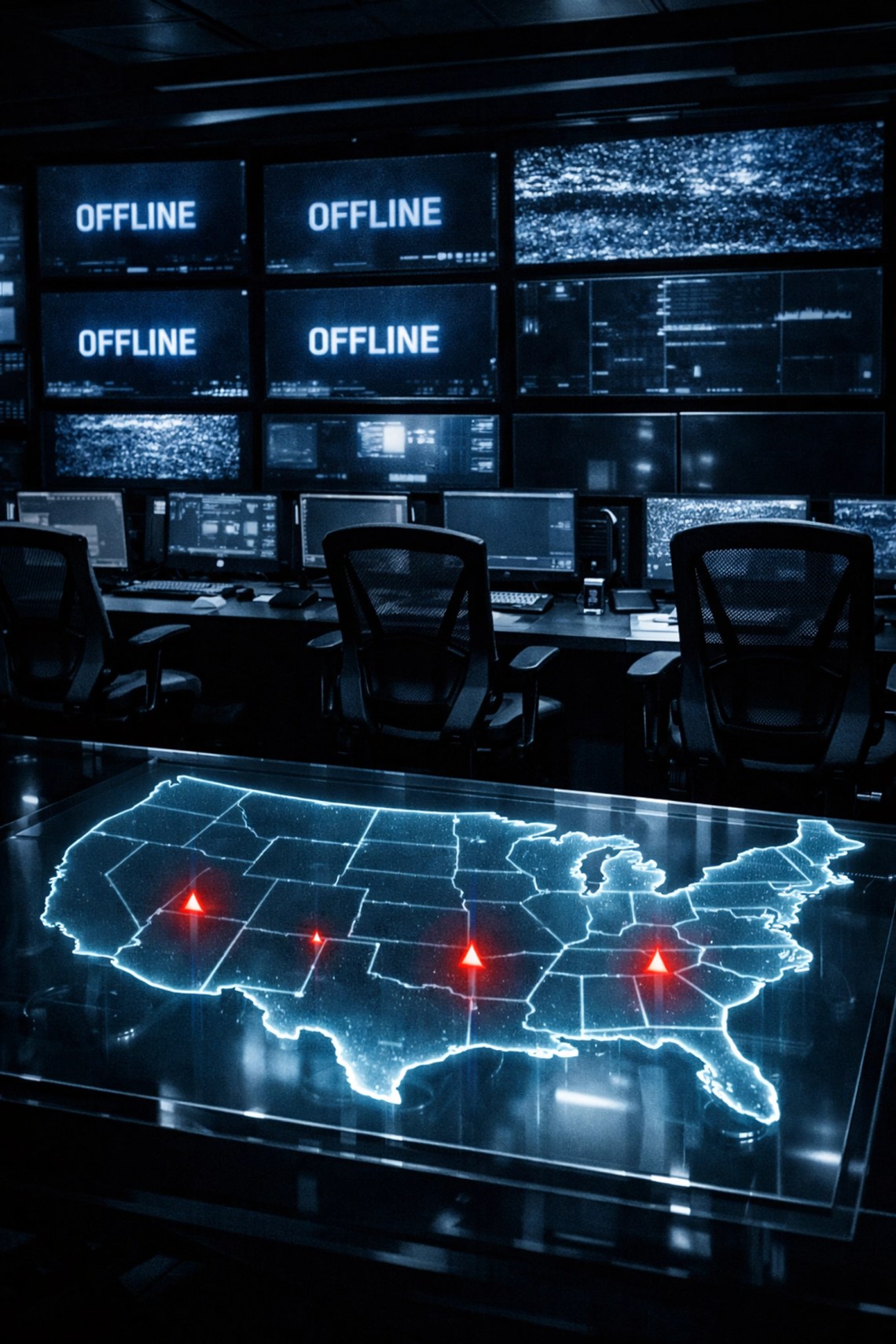
Think about the implications for a second. While the political class in Washington bickers over line items and appropriations, the very agencies tasked with tracking "lone-wolf" threats and organized foreign operatives are operating on a skeleton crew. Trump’s rhetoric suggests that the timing couldn’t be worse. With tensions in the Middle East reaching a boiling point, the fear is that these cells: dormant for years: might find this moment of domestic distraction the perfect time to wake up.
We’ve seen similar warnings before. If you look back at our Daily Briefing on domestic alerts, the pattern of heightened concern is clear. But this feels different. It’s not just a general threat level; it’s a specific accusation that our political paralysis is creating a tactical advantage for our enemies. Is the shutdown a necessary stand for fiscal responsibility, or is it a dangerous gamble with national security? It’s a question that’s becoming increasingly difficult to answer as the days tick by.
The concern isn't just about physical attacks, either. As the DHS slows down, our cyber defenses are also at risk. The "Iran-aligned hacktivists" mentioned in recent bulletins thrive in the gaps. When the people monitoring our networks are distracted or sidelined, the digital "front door" of our country is left ajar.
The Cultural Pivot: Expanding the SAVE Act for 2026
If the DHS shutdown is the immediate crisis, the expansion of the SAVE Act is the long-term play. Donald Trump is once again proving that he understands the pulse of the conservative base better than almost anyone in the game. He isn't just looking at the next news cycle; he’s looking at the 2026 midterms.
The SAVE America Act was originally framed around voting integrity: ensuring that only citizens cast ballots. But now, Trump is pushing to broaden its scope significantly. He’s advocating for the inclusion of bans on transgender surgeries for minors and a federal prohibition on men participating in women’s sports.

Why the pivot? Because it’s about more than just policy; it’s about defining the battleground. By merging voting integrity with these high-voltage cultural issues, the Trump team is creating a "litmus test" for the 2026 elections. They are framing the SAVE Act not just as a piece of legislation, but as a manifesto for the protection of traditional American life.
You’ve probably felt this shift yourself. The conversation has moved from the technicalities of voter ID: which you can read more about in our analysis of legislative ultimatums: to a broader discussion about the "sanctity" of our institutions. Whether it’s the sanctuary of the voting booth or the sanctuary of women’s sports, the message is the same: things are changing, and someone needs to hold the line.
Trump is effectively betting that the American voter is more motivated by these cultural "protection" issues than by standard economic talking points. It’s a strategy designed to force his opponents into uncomfortable positions. If they vote against the SAVE Act, he will argue they are voting against election security and for "radical" social changes. It’s a classic political pincer movement.
The "Neurological" Strike: A New Chapter in Iran
Finally, we have to look toward the horizon: specifically toward Tehran. For decades, the phrase "forever war" has haunted the American psyche. We think of boots on the ground, dusty humvees, and decades-long occupations that seem to yield little more than heartache and debt.
However, the recent U.S.-Israeli strikes on Iran suggest a radical departure from that old playbook. Analysts are calling these "neurological" strikes. The goal isn't to destroy an entire army or occupy a city; it’s to decapitate the leadership and sever the nerves of the command-and-control apparatus.

Instead of a "sledgehammer" approach, this is a "scalpel." By targeting the decision-makers and the technological infrastructure that allows them to project power, the U.S. and Israel are attempting to end the conflict before it even becomes a war in the traditional sense. It’s about taking out the brain of the operation so the body can no longer fight.
This approach reflects a massive shift in military philosophy. As we noted in our briefing on the Iran strikes and the AI pivot, the marriage of high-level intelligence and precision technology is making large-scale ground invasions look like relics of a bygone era.
The strategy is clear: if you can remove the leadership that insists on the "forever war," you might actually be able to stop it. It’s a high-stakes game, though. Taking out a regime's "brain" can lead to a quick collapse, but it can also lead to a chaotic power vacuum. We are currently standing at that very precipice of order and chaos.
There’s something almost poetic: if a bit chilling: about the precision of these operations. They represent the ultimate triumph of information over mass. In the old days, you needed a million men to change the course of history. Today, it seems you just need the right coordinates and a well-timed strike.
A World in Flux
As we wrap up today’s briefing, it’s worth taking a moment to reflect on how interconnected these stories really are. The DHS shutdown isn't just a domestic policy dispute; it’s a vulnerability that our enemies abroad: like those being targeted in the "neurological" strikes: are undoubtedly watching. Meanwhile, the internal cultural debates framed by the SAVE Act are the very things that define what we are trying to protect in the first place.
It’s easy to feel overwhelmed by the sheer scale of it all. But remember, civic education isn't just about knowing the facts; it’s about seeing the threads that tie them together. Whether it’s the security of our borders, the integrity of our sports, or the precision of our strikes, it all comes back to a single question: what kind of country do we want to be?
Stay informed, stay engaged, and most importantly, stay vigilant. We’ll be right here with you tomorrow to break it all down again.
SEO Tags:
National Security
DHS Shutdown
Donald Trump 2026
SAVE America Act
Iranian Sleeper Cells
Precision Strikes Iran
Women's Sports Policy
Midterm Strategy 2026
U.S. Israel Relations
Political Commentary
National Security, DHS Shutdown, Donald Trump 2026, SAVE America Act, Iranian Sleeper Cells, Precision Strikes Iran, Women's Sports Policy, Midterm Strategy 2026, U.S. Israel Relations, Political Commentary
Share this:

Discover more from CAPITALISTS.com
Subscribe to get the latest posts sent to your email.


